
why choose us ?
OUBO Lighting is a professional manufacturer of LED lights integrating product development and production.
Rich Experience
We have rich production experience, so far we have more than ten years of experience in the LED field.
Production capacity
our production capacity is around 40000pcs every day. When the materials are getting ready ,we can finish a container in 2-3days. We have ability to deal with big orders.
high quality
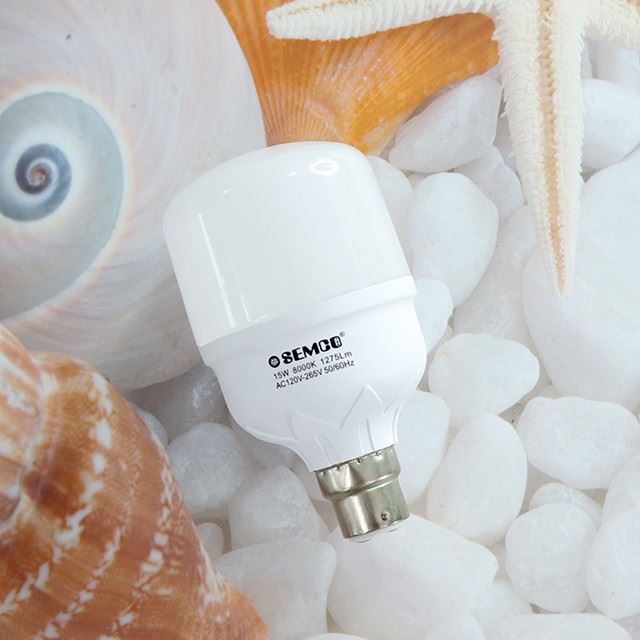
We have 2 brands of our own ,1 is OUBO ,another is SEMCO.
Export countries
At present, the products are exported to the Middle East, Europe, America, North Africa, southeastern countries and other places, and are deeply trusted by customers with excellent product quality.
-

T Shape Led Bulb Light 30W 40W 50W 60W B22 E27 Lamparas
LED Lamp 7W 9W 12W 15W E27 85-265V 2700-6500K Day Light LED Bulb Lighting Add to Inquiry -
-
-
-
-
-
-
-
-
-
-


What is LED Bulb?
“LED” stands for light-emitting diode, the technology behind LED lighting. When asking “what is LED lighting?” you usually want to know the difference between LED bulbs and traditional incandescent bulbs.
Incandescent bulbs have a thin metal filament that heats up as electricity passes through it. When heated enough, the filament glows to produce light.
An LED light works by having an electrical current pass through a semiconducting material – the diode. The tiny diodes within an LED bulb cast light when electricity is applied. This technology doesn’t rely on heat to produce light and has greater energy-efficiency than incandescent bulbs.
To light up a room, an incandescent lamp might use 60-watts of electricity, while an LED bulb will produce the same amount of light using about 10-watts.
Energy efficiency is one of the most important LED light advantages, but low maintenance is another great benefit. LEDs have an exceptionally long lifespan of more than 10 years because there is no filament to burn out. As manufacturers work to refine the production process, the upfront costs of LED lighting have come down, contributing to long-term savings.
Another benefit is that LEDs emit almost no heat or UV rays. They are usually not hot to the touch, making them safer to handle than incandescent bulbs. Plus, they can help reduce air conditioning costs and won’t cause nearby fabrics and furniture to fade.
LED lighting comes in many shapes, sizes, colors and temperatures for use throughout the home.


Types of LED Bulb
- Standard LED light bulbs: Standard LED bulbs disperse light at a wide angle throughout a room. They’re ideal for reading lamps, hallways and other common fixtures such as semi-flush and flush-mount fixtures.
- Can LED light bulbs: Also known as recessed lights, can light LED bulbs fit into sockets – or cans – mounted in the ceiling.
- Flood LED light bulbs: Flood bulbs are designed to emit a strong but wide beam of light to illuminate a broad area. They’re mainly used in exterior applications.
- Track LED light bulbs: Track lights are often used for directional lighting, work area task lighting or to highlight something specific such as artwork and other decorative features.
- Tube LED light bulbs: Tube lights, also known as linear light bulbs, have a functional style designed for more professional applications like office buildings, kitchens and workspaces.
The Advantages of LED Bulb
LED bulbs have many advantages over traditional incandescent bulbs. Some of the key benefits are:
Long Lifespan
LED bulbs can last up to 25 times longer than traditional bulbs.
01
Energy-saving and safe
LED bulbs are more energy efficient and consume only 1/3 of the electricity compared to incandescent bulbs, which reduces electricity bills. LED bulbs do not produce any UV radiation or heat, making them safer to use at close range or around children.
02
Environmentally friendly
LED bulbs are recyclable and do not contain any toxic chemicals, which makes them a more environmentally friendly lighting choice.
03
Durability and versatility
LED bulbs are extremely durable and can withstand shock, vibration, and extreme temperatures, making them ideal for outdoor lighting. They also come in a variety of shapes and sizes, allowing users to customize their lighting needs.
04
Cost-effective
Due to their longer lifespan and higher energy efficiency, LED bulbs are more cost-effective than traditional bulbs. Users can recoup the initial cost of purchasing LED bulbs by saving on energy costs.
05
The Basics of LED Bulb Manufacturing
The basics of LED bulb manufacturing involve a few key components. They are as follows:

Manufactured Using Photolithography
First, the LED chips are manufactured using a process known as photolithography. This is a complex process that involves etching patterns onto a semiconductor material in order to create electrical pathways.

Mounting And Connecting
Once the chips have been created, they are mounted onto metal heat sinks and connected to leads that will allow electricity to flow through them.

Covering
Finally, the chips are then covered with a protective coating and placed into a housing made of plastic or metal.
Testing And Inspection
Once the covering is done, the assembly line moves on to testing and inspection, where each bulb is checked for quality assurance before it can be sold.
And there you have it – the basics of LED bulb manufacturing! With this overview, you now have a better understanding of the process involved in making LED bulbs.
Raw Materials Required For LED Bulb Manufacturing Business
For assembly of LED-based lighting systems up to 10W, the raw materials required are listed below:
- LED chips;
- Heat-sink devices;
- Plastic body;
- Connecting wire;
- Miscellaneous items;
- Rectifier circuit with filter;
- Metallic cap holder;
- Reflector plastic glass;
- Soldering flux;
- Packaging material.

how can you find the right bulb for your home?
Light bulbs generally come in three “colors” (also called temperatures) with an associated amount of kelvins (we’ll get into that a bit later):

Soft / warm white
(2200K – 2700K) gives a warm and cozy (almost yellowish) hue to the room. It’s best for living rooms and bedrooms.

Cool white
(3000K – 4100K) is a more standard white color, and it’s most suitable for a kitchen, bathroom, or study room.

Daylight
(5000K – 6000K) gives off a bright, blueish light that works best for things like reading lamps. It’s usually not a good idea to use these for an entire room.
5 ways to extend lamp life span
Replacing a bulb in a lamp is nothing complicated, but it is usually an unpleasant surprise and an additional cost, let alone replacing an entire lamp or several lamps. It's worth employing a few tricks that will extend the life of your lighting and save a considerable sum on an annual basis. What should we do to ensure that the lamps last as long as possible? Keep reading.
Touch lamps and bulbs with clean hands
Seemingly no one needs reminding of this, and yet... Dirt and deposits that are on your fingers can leave spotty stains on the surfaces of both the bulb and the lamp shade. Although LED lighting heats up much less than traditional incandescent or fluorescent bulbs, such spots, which are heated for a long time during illumination, represent areas with a much higher temperature than the rest of the bulb's surface. This is particularly important for halogen light sources, but it also does not serve the most popular LEDs at the moment and can lead to premature lamp failure or simply the formation of spots that are unsightly and impossible to remove
01
Protect luminaires from dust and water vapour
Even if you use seemingly indestructible indoor lamps, do not expose them to excessive clouds of dust and vapor. They form deposits that evenly cover the light source and the lampshade. This can significantly shorten the service life and even ... make it difficult to replace the bulb. Lamps intended for indoor use should be installed in well-ventilated areas, which is a key condition for long-term use. If the lamps are hung near the cooking area or simply in the kitchen where the windows are often closed, then it is important to keep them maintained and clean. Floating water vapor combined with dust or grease, although not necessarily visible at first glance, can impair any lighting, both from the outside and from the inside. In the bathroom, use lamps with higher sealing (minimum IP44), as this is a place where water vapor is always present.
02
Keep a sufficient distance from the light source
Modern LED light sources get much cooler during the lighting process than conventional light sources. Nevertheless, it is necessary to maintain a minimum distance from other objects as specified in the operating instructions. Even the highest quality components and specially selected diodes can be damaged if unnecessary objects are placed nearby. Plastics that are illuminated for a long time may become deformed or discolored, while poorly ventilated bulbs heat up more and have a shorter service life. To ensure its reliability, it is worth removing unnecessary objects that could come into contact with the bulb.
03
Check the luminaire after light source replacement
After replacing the bulb, it is necessary to make sure that it is firmly in place and the lampshade is completely stable. This problem does not apply to lamps with integrated light sources, however, it is worth remembering that on other models, checking that all parts are in place is a prerequisite for trouble-free operation. It may happen that when unscrewing the bulb, we unintentionally loosen the lampshade, or the lampshade may have been installed incorrectly after the last cleaning of the lamp.
A crookedly screwed bulb can not only damage the fixture inside the lamp, but can even cause sparks or short circuits, the consequences of which may be fire or damage to electrical installations.
04
Efficient after-sales serviceMaintenance above all!
Proper maintenance of lamps is crucial to their life span. It is usually sufficient to use cloths dampened with water and a little detergent, unless the instruction manual recommends just wiping the lamp dry. It is most reasonable to thoroughly clean the luminaires at least twice a year, e.g. in spring and autumn. However, on an ongoing basis, we should prevent excessive accumulation of dust, the main contributor to overheating of light sources. It is also worth remembering to immediately remove moisture from the surface of lamps if they have been accidentally sprayed with water.
05
Following the above rules will ensure that you use your luminaires for a long time without unnecessary surprises, expenses and hikes up the ladder. Of course, also bear in mind that the higher quality lamps you choose, the longer you will enjoy trouble-free operation.
Our factory


OUR CERTIFICATES


FAQS
Q: Can you provide free samples?
A: Yes, the courier fee should be borne by you.
Q: How about the delivery time?
A: Within 7 days for samples; 20-25 days for bulk orders.
Q: Do you have any MOQ limit?
A: No limit for first order, sample order or less quantity order is OK
Q: How about your warranty?
A: First, our products are produced in a strict quality control system, and the defect rate will be less than 0.3%. Second, we provide 0. 3-0.5% extra parts or products in your order. Third, during the warranty period, we will send new ones.
Q: Is it OK to print my logo on the led light products?
A: Yes. No problem.
Q: What is your payment terms?
A: Sample: Bank TT, 100% payment in advance. Bulk order: Bank TT, 30% deposit, balance 70% settled before shipment.
What is your after-sales service?
What is your after-sales service?
Q: Can I visit your factory?
A: Sure, please call us directly.
Q: Are you a factory or a trading company?
A: We are a factory with more than 10 years of experience in manufacturing LED indoor lighting. We are located in Guangzhou, welcome to visit us!
Q: How to deal with product failure?
A: First, our products are produced under a strict quality control system, and the defect rate will be less than 0.3%. Second, we provide 0.3-0.5% extra parts or products in your order. Third, during the warranty period, we will send new ones.
Q: How do you ship and how long does it take to arrive?
A: For sample orders, we usually ship by DHL, UPS, FedEx or TNT. It usually takes 3-5 days to arrive. Large quantity orders will be shipped by air or sea.
Q: Is it OK to put LED bulbs in regular fixtures?
A: As long as the mounting base (socket) is the same size and type, you can use an LED bulb in an existing fixture. If the mounting base isn't the same size and type, the LED bulb will not fit the socket. You should never use a bulb with a higher wattage than what is recommended for the fixture.
Q: Where can you not use LED bulbs?
A: Why You Can't Use Certain LED Bulbs in Enclosed Fixtures ...
Enclosed fixtures that don't allow for airflow to LEDs can drastically affect the bulbs performance and lifespan. This is why some bulbs cannot be used in an enclosed ceiling fan or a fully enclosed porch light fixture.
Enclosed fixtures that don't allow for airflow to LEDs can drastically affect the bulbs performance and lifespan. This is why some bulbs cannot be used in an enclosed ceiling fan or a fully enclosed porch light fixture.
Q: What are 3 kinds of lighting LEDs can replace?
A: LED bulbs can replace traditional incandescent bulbs and fluorescent tubes, providing bright and energy-efficient lighting solutions. LED bulbs come in different shapes and sizes, such as A-shape, G-shape, and PAR bulbs, to fit various fixtures.
Q: Do LED lights have replaceable bulbs?
A: Most manufacturers use the term "LED lamp" only for products with a non-replaceable, factory-installed light source. If the product does not have "LED" in its name, it usually offers the option to replace the bulb. In this case, the choice between halogen, LED and fluorescent tubes is yours.
Q: Can you use LED bulbs in old lamps?
A: Will I need new or special light fixtures? You do not need specialist or new light fittings to enjoy the benefits of LED energy saving light bulbs. Retrofit like-for-like LED bulb replacements are available for many existing light fittings. Simply decide which style of light bulb you require and plug them in!
Q: Your honor?
A: Our company has passed the international standard ISO9001 quality management system certification, and obtained TUV, CB, EMC, LVD, RoHs, CE, SAA, SASO and other certifications.
As one of the most professional LED bulb manufacturers in China, we're featured by cheap products and good service. Please rest assured to wholesale customized LED bulb at competitive price from our factory. Contact us for free sample.
